

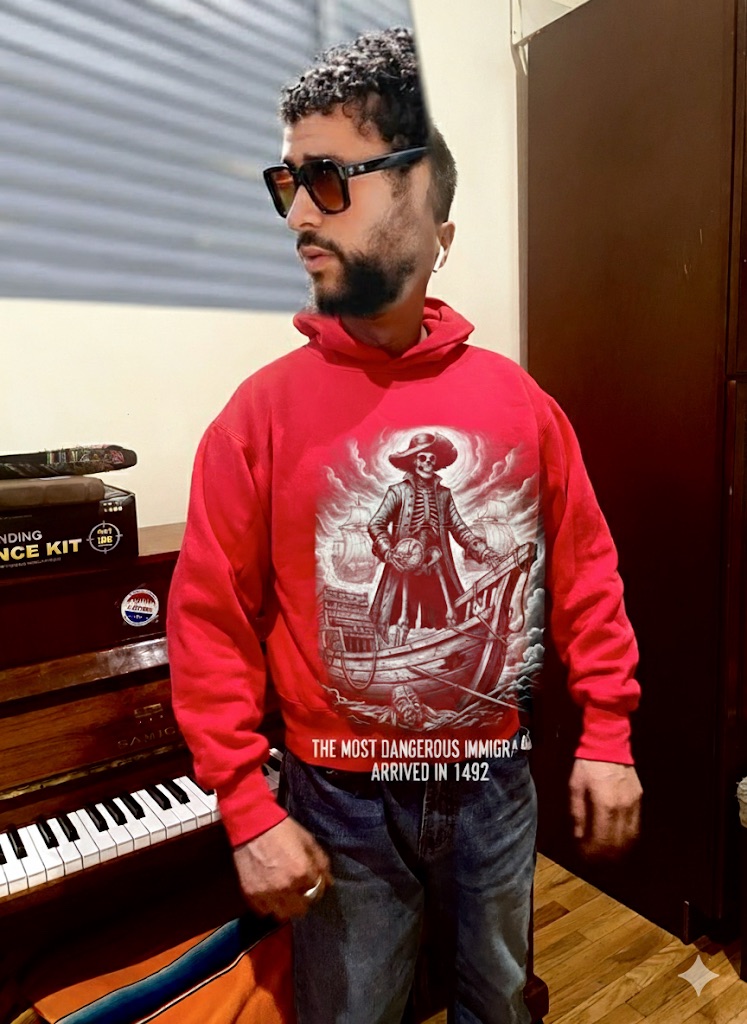
The Most Dangerous Immigrants Didn’t Cross the Border—They Arrived in 1492
By—Jay
Forget the history books. We are diving into the brutal, forgotten history of European colonization. The real story of invaders, conquerors, and the systemic devastation they unleashed across the Americas, starting with Columbus.
We’ve all heard the narrative: brave explorers, new discoveries, and the founding of great nations. But for millions of Indigenous people across the Americas, the arrival of Europeans starting in 1492 wasn’t a discovery—it was the start of a cataclysm.
The idea that “The Most Dangerous Immigrants Arrived in 1492” is more than a provocative statement; it’s a necessary reframing of history. The men who came from Europe were not simply settlers; they were settler-colonists, invaders, and brutal killers who ushered in centuries of systemic violence and oppression.
The Spanish Shadow: From the Caribbean to the Aztec Empire
The devastation began almost immediately. When Christopher Columbus landed in the Caribbean in October 1492, he initiated the subjugation of the Taíno people in places like Puerto Rico and Hispaniola. The toll on the Indigenous population from forced labor (the encomienda system) and introduced diseases like smallpox was catastrophic.
This brutality spread with figures like Hernán Cortés, who arrived in Mexico in 1519. Cortés and the Spanish conquistadors did not “discover” the Aztec Empire; they conquered it, leading to massacres and the near-total destruction of one of the world’s most sophisticated civilizations. The conquest of Central and South America was a massive campaign of pillaging, rape, and enslavement fueled by a relentless quest for gold.
The story of conquest wasn’t limited to the Spanish empire.
The English arrived in North America, establishing their first permanent settlement at Jamestown, Virginia, in 1607. They launched a parallel campaign of colonization, systematically encroaching on Indigenous lands, breaking treaties, and engaging in wars that aimed at the extermination or forced removal of Native American tribes. This foundation of theft and violence is crucial to understanding the formation of the United States.
### Europe’s Collective Hands: Portugal, Germany, and Beyond
The entire European continent participated in this tragic reshaping of the Americas:
• The Portuguese claimed Brazil starting in 1500, establishing a brutal slave trade and sugar plantation economy that devastated local populations.
• Even later waves of migration had significant impacts. German settlers, arriving in the mid-19th century, carved out cultural and demographic strongholds in Chile and Argentina.
• Meanwhile, waves of Italian immigrants heavily influenced the culture and dialect of nations like Argentina and Colombia.
For centuries, European powers—Spanish, English, Portuguese, Dutch, French, and their cousins—stripped the lands, massacred populations, and laid the foundations for systemic inequality that defines the continent to this day.
## The Movie Pitch: The Real 1492
The core argument of this movie idea is simple: we must confront the true legacy of colonization. This wasn’t about democracy; it was about authoritarian control and resource extraction, a system disguised as progress.
This film, which we might call The Serpent’s Cross or The Dangerous Tide, aims to tell the story of the Americas not through the eyes of the conqueror, but through the devastating experiences of the conquered.
This is a story that is long overdue. It’s time to rewrite the history we were taught.


Discover more from America The Beautiful
Subscribe to get the latest posts sent to your email.
