My Journey Through the Wonderland of Words: From Short to Super-Long! 

Jay here: 7/4/25

There’s no surprise that I, as an aspiring WordPress author, would be fascinated with words. I think that on WordPress, most people are fascinated with words, short and long. For me, this fascination has been a lifelong journey, a captivating evolution that started from a rather unique place.

You see, while I navigate the world speaking English now, my native tongue is Mexican Spanish. It wasn’t until I was prominently 12 years old that I truly began to discover English, and with it, the incredible depth and sometimes mind-boggling complexity of its vocabulary. It was around that time I first stumbled upon a word that, at the time, was widely considered the longest in the dictionary:

antidisestablishmentarianism.

Imagine being a pre-teen and wrapping your head around that! But I did. This formidable 28-letter word refers to the opposition to the disestablishment of the Church of England – essentially, being against separating the state church from government support. It’s a mouthful, for sure, but understanding its meaning felt like unlocking a secret level in the game of language.

My high school years brought an even deeper dive into the roots of language. I developed a heavy interest in learning Latin. Perhaps it was because of its clear parallels with Spanish, my first language, but I found it remarkably easy to grasp. It quickly became apparent that so many phrases we use daily in Spanish are direct descendants of Latin and other Romance languages. This connection, in turn, ignited a profound fascination within me for etymology – the study of the origin of words, how their meanings have evolved, and tracing them back to their earliest forms and geographical origins. It’s like being a linguistic detective!

Then, as I ventured into college, another lexical titan emerged to challenge my growing vocabulary. I encountered the next biggest word, a true 45-letter behemoth: 

pneumonoultramicroscopicsilicovolcanoconiosis.

Yes, you read that right. And before you try to pronounce it, remember it starts with a silent ‘P’! This colossal word describes a lung disease caused by the inhalation of very fine silica dust, often originating from volcanic ash. What makes this word even more fascinating, from a linguistic perspective, is that it wasn’t discovered in a dusty medical tome but was actually coined intentionally by Everett M. Smith, the then-president of the National Puzzlers’ League, in 1935 at their annual meeting. He specifically designed it to be the longest word in the English language, combining various Greek and Latin roots related to lungs, microscopic, silica, volcano, and disease. While it does refer to a legitimate lung condition, its creation as a linguistic stunt adds an incredible layer to its story.

My journey with words, from the short and sweet to these monumental linguistic creations, has been nothing short of incredible. It has shown me that language is a living, breathing entity, constantly evolving, borrowing, and expanding.

And for a blogger like me, there’s no greater joy than exploring its vast landscape, one fascinating word at a time.

What about you, my dear readers? What words have fascinated you on your own linguistic journeys? Share your thoughts in the comments below!

The “Celebrity” DM and the Anatomy of a Hack

Hey everyone, Jay here! Let’s talk about something that’s probably happened to you, too: that bizarre moment a “celebrity” slides into your DMs. 

Just yesterday, it hit me on TikTok. A “Susan Phillips” popped up, and my internal alarm bells started ringing. Real celebs on TikTok? They’ve got millions of followers and a content library deeper than the ocean. This “Susan Phillips”? Two videos, zero reposts. A classic fake account.

TikTok, Substack, and the “Fuckery” Factor

My TikTok run-in is just the latest. But if we’re talking about online “fuckery” and hacking, my time on Substack takes the cake. As fellow writers and bloggers, you know how personal our Substack newsletters are. The amount of bogus accounts trying to connect there, often masquerading as well-known authors or journalists, was truly wild. These experiences, across both platforms, have hammered home the need for serious vigilance.

Unpacking “Hack”: From Battlefield to Browser

This whole experience got me thinking about the word “hack” itself. We use it constantly in the digital world, but its origins are far grimmer and, frankly, fascinating.

Ever heard “that doctor is a hack” or “he’s a hack of a doctor”? That phrase comes from a brutal historical reality. In wartime, doctors sometimes had to perform emergency amputations with shocking speed and often little sanitation. They would literally “hack off” a limb to save a life. It was a crude, desperate, but sometimes necessary act.

And that’s precisely why the term resonates today. Just like those desperate, limb-hacking doctors, a modern computer hacker can, in a digital sense, “take” something from you. They might swipe your data, your identity, or simply your peace of mind with their deceptive tactics. They exploit vulnerabilities to gain unauthorized access or cause disruption.

Guarding Your Digital Turf: My Quick Checklist

So, how do we protect our online spaces? Whether you’re on WordPress, Substack, TikTok, or anywhere else, stay sharp.

 * Check the Numbers: Low follower counts and minimal content from a supposed big-name? Major red flag.

 * Trust Your Gut: If a message or profile feels off, it probably is. Don’t get star-struck; stay smart.

 * Never Share Personal Info: Real pros won’t randomly ask for your bank details or passwords. Ever.

 * Verification Helps (But Isn’t Foolproof): A blue checkmark is good, but its absence doesn’t automatically mean fake. Do your own quick research.

My own battles with impersonators—including a supposed TV personality from a popular reality show, a famous musician, and now “Susan Phillips”—have made me extra cautious. Your online safety and peace of mind are non-negotiable.

Let’s keep our digital world authentic, engaging, and free from these digital “hacks” trying to chip away at our peace. Have you had similar experiences? Share your stories below!


Alligator Alcatraz: Facing Our Fears

Embracing Our Freedoms

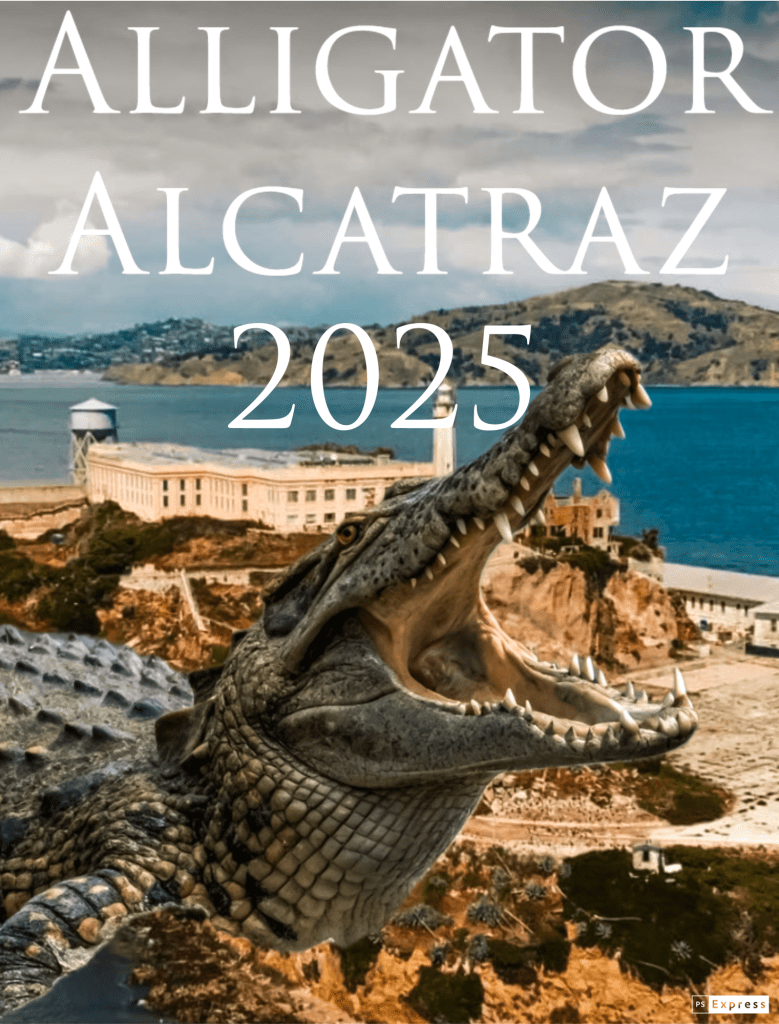
Jay here: You might have seen my “Alligator Alcatraz 2025” imagery floating around – a primal beast against an inescapable fortress. It’s meant to provoke, to make you feel that chilling blend of shock and awe. And honestly, it feels like a raw metaphor for something many Americans are grappling with right now.

Think of Alcatraz. Historically, it’s a symbol of confinement, a place of no escape, where freedoms are utterly stripped away. Today, it resonates with a gnawing feeling many of us share: are we, as Americans, becoming trapped? Are we confined by seemingly unyielding political divides, by economic anxieties, or by societal pressures that limit our choices and stifle open discourse? This sense of being cornered, of core liberties being challenged, is something tangible in the air.

Then consider the Alligator. A powerful, ancient creature, often unseen until it strikes. It represents a lurking, primal danger – perhaps the deep-seated divisions that surface suddenly, the aggressive rhetoric that feels predatory, or the systemic issues that threaten to devour our foundational values. This “cruelty” and “inhumanity” we sometimes witness isn’t incidental; for some, it feels like the very point, designed to instill fear and control.

As an immigrant who proudly became a citizen of this incredible nation, I look at these anxieties with a unique lens. I chose this country; I embraced its promise. And as someone in an interracial marriage, I live the reality of diverse freedoms every day. It’s precisely because I deeply value the boundless liberties and hard-won rights enshrined in our Constitution that these present-day challenges sting so sharply.

But here’s the truth: the spirit of America isn’t defined by its temporary struggles. It’s defined by our resilience. The very impetus for this nation was a relentless pursuit of freedom and justice. That constitutional framework, those debates and discussions, those hard-fought rights – they are not just words on paper. They are the bedrock of our society, granting us the power to confront the “alligators” and dismantle the metaphorical “Alcatrazes” we face. My pride in this nation stems from its capacity for self-correction, its endless potential for growth, and the unwavering conviction that our freedoms are worth fighting for, every single day.

Documento al español:
Alligator Alcatraz 2025
Puede que hayas visto mis imágenes de “Alligator Alcatraz 2025” flotando por ahí: una bestia primigenia contra una fortaleza ineludible. Pretende provocar, hacerte sentir esa escalofriante mezcla de conmoción y asombro. Y, sinceramente, se siente como una cruda metáfora de algo con lo que muchos estadounidenses están lidiando ahora mismo.

Piensa en Alcatraz. Históricamente, es un símbolo de confinamiento, un lugar sin escape, donde las libertades son completamente despojadas. Hoy, resuena con un sentimiento inquietante que muchos de nosotros compartimos: ¿estamos, como estadounidenses, quedando atrapados? ¿Estamos confinados por divisiones políticas aparentemente inquebrantables, por ansiedades económicas o por presiones sociales que limitan nuestras opciones y sofocan el discurso abierto? Esta sensación de estar acorralado, de que las libertades fundamentales están siendo desafiadas, es algo tangible en el ambiente.
Luego, considera el Caimán. Una criatura poderosa y antigua, a menudo invisible hasta que ataca. Representa un peligro latente y primario, quizás las divisiones arraigadas que surgen de repente, la retórica agresiva que se siente depredadora o los problemas sistémicos que amenazan con devorar nuestros valores fundamentales. Esta “crueldad” e “inhumanidad” que a veces presenciamos no es incidental; para algunos, se siente como el objetivo principal, diseñado para infundir miedo y control.
Como inmigrante que orgullosamente se convirtió en ciudadano de esta increíble nación, miro estas ansiedades con una lente única. Elegí este país; abracé su promesa. Y como alguien en un matrimonio interracial, vivo la realidad de diversas libertades todos los días. Es precisamente porque valoro profundamente las libertades ilimitadas y los derechos ganados con tanto esfuerzo consagrados en nuestra Constitución que estos desafíos actuales duelen tan intensamente.
Pero aquí está la verdad: el espíritu de Estados Unidos no se define por sus luchas temporales. Se define por nuestra resiliencia. El mismo impulso para esta nación fue una búsqueda incansable de libertad y justicia. Ese marco constitucional, esos debates y discusiones, esos derechos tan reñidos, no son solo palabras en un papel. Son la base de nuestra sociedad, otorgándonos el poder de enfrentar a los “caimanes” y desmantelar los “Alcatraces” metafóricos que enfrentamos. Mi orgullo por esta nación proviene de su capacidad de autocorrección, su potencial ilimitado de crecimiento y la convicción inquebrantable de que nuestras libertades valen la pena luchar por ellas, todos los días.