6/27/25 From Reuters News:

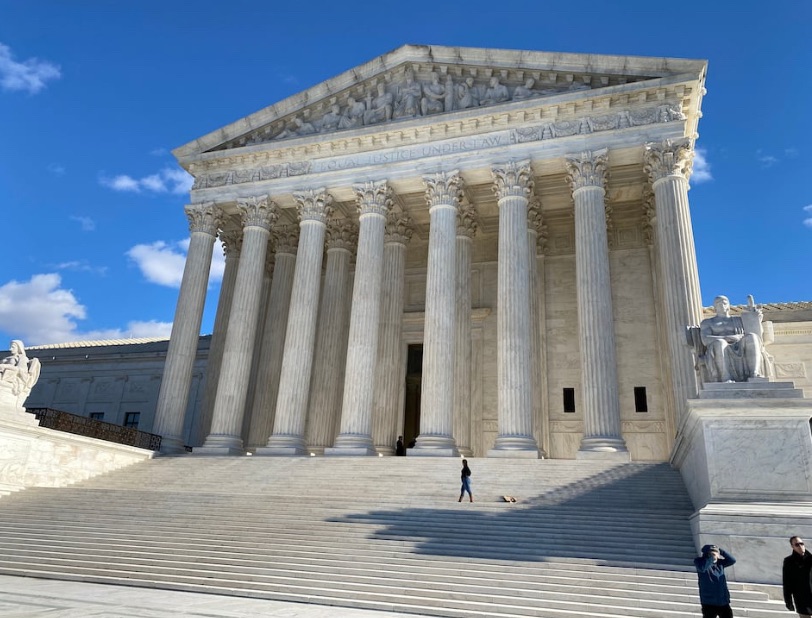
WASHINGTON – The U.S. Supreme Court may rule on Friday on Donald Trump’s attempt to broadly enforce his executive order to limit birthright citizenship, a move that would affect thousands of babies born each year as the Republican president seeks a major shift in how the U.S. Constitution has long been understood.

The administration has made an emergency request for the justices to scale back injunctions issued by federal judges in Maryland, Washington and Massachusetts blocking Trump’s directive nationwide. The judges found that Trump’s order likely violates citizenship language in the U.S.

Constitution’s 14th Amendment. On his first day back in office, Trump signed an executive order directing federal agencies to refuse to recognize the citizenship of children born in the United States who do not have at least one parent who is an American citizen or lawful permanent resident, also called a “green card” holder.

More than 150,000 newborns would be denied citizenship annually under Trump’s directive, according to the plaintiffs who challenged it, including the Democratic attorneys general of 22 states as well as immigrant rights advocates and pregnant immigrants. 

The case before the Supreme Court was unusual in that the administration used it to argue that federal judges lack the authority to issue nationwide, or “universal,” injunctions, and asked the justices to rule that way and enforce the president’s directive even without weighing its legal merits.

Federal judges have taken steps including issuing nationwide orders impeding Trump’s aggressive use of executive action to advance his agenda.

The plaintiffs argued that Trump’s directive ran afoul of the 14th Amendment, which was ratified in 1868 in the aftermath of the Civil War of 1861-1865 that ended slavery in the United States. The 14th Amendment’s citizenship clause states that all “persons born or naturalized in the United States, and subject to the jurisdiction thereof, are citizens of the United States and of the state wherein they reside.” 

The administration contends that the 14th Amendment, long understood to confer citizenship to virtually anyone born in the United States, does not extend to immigrants who are in the country illegally or even to immigrants whose presence is lawful but temporary, such as university students or those on work visas. In a June 11-12 Reuters/Ipsos poll, 24% of all respondents supported ending birthright citizenship and 52% opposed it. Among Democrats, 5% supported ending it, with 84% opposed. Among Republicans, 43% supported ending it, with 24% opposed.

The rest said they were unsure or did not respond to the question. The Supreme Court, which has a 6-3 conservative majority, has handed Trump some important victories on his immigration policies since he returned to office in January.

On Monday, it cleared the way for his administration to resume deporting migrants to countries other than their own without offering them a chance to show the harms they could face.

In separate decisions on May 30 and May 19, it let the administration end the temporary legal status previously given by the government to hundreds of thousands of migrants on humanitarian grounds. But the court on May 16 kept in place its block on Trump’s deportations of Venezuelan migrants under a 1798 law historically used only in wartime, faulting his administration for seeking to remove them without adequate due process.

The court heard arguments in the birthright citizenship dispute on May 15. U.S. Solicitor General D. John Sauer, representing the administration, told the justices that Trump’s order “reflects the original meaning of the 14th Amendment, which guaranteed citizenship to the children of former slaves, not to illegal aliens or temporary visitors.”

An 1898 U.S. Supreme Court ruling in a case called United States v. Wong Kim Ark long has been interpreted as guaranteeing that children born in the United States to non-citizen parents are entitled to American citizenship. 

Trump’s administration has argued that the court’s ruling in that case was narrower, applying to children whose parents had a “permanent domicile and residence in the United States.” 

Universal injunctions have been opposed by presidents of both parties – Republican and Democratic – and can prevent the government from enforcing a policy against anyone, instead of just the individual plaintiffs who sued to challenge the policy. 

Proponents have said they are an efficient check on presidential overreach, and have stymied actions deemed unlawful by presidents of both parties.
Mamdani declares victory in NYC’s Democratic mayoral primary as Cuomo concedes

 Jun 25, 2025 6:28 AM EDT

NEW YORK (AP) — Zohran Mamdani declared victory in New York City’s Democratic mayoral primary Tuesday night after Andrew Cuomo conceded the race in a stunning upset, as the young, progressive upstart who was virtually unknown when the contest began built a substantial lead over the more experienced but scandal-scarred former governor.

LIVE RESULTS: New York City mayor’s race Democratic primary

Though the race’s ultimate outcome will still be decided by a ranked choice count, Mamdani took a commanding position just hours after the polls closed.

With victory all but assured, Mamdani, a 33-year-old democratic socialist who ran an energetic campaign centered on the cost of living, told supporters, “I will be your Democratic nominee for the mayor of New York City.”

“I will be the mayor for every New Yorker, whether you voted for me, for Governor Cuomo, or felt too disillusioned by a long-broken political system to vote at all,” he said. “I will work to be a mayor you will be proud to call your own.”

Cuomo, who had been the front-runner throughout a race that was his comeback bid from a sexual harassment scandal, conceded the election, telling a crowd that he had called Mamdani to congratulate him.

“Tonight is his night. He deserved it. He won,” Cuomo told supporters.

Cuomo trailed Mamdani by a significant margin in the first choice ballots and faced an exceedingly difficult pathway to catching up when ballots are redistributed in New York City’s ranked choice voting process.

WATCH: New York City mayoral primary could forecast the future for Democrats

Mamdani, a member of the state Assembly since 2021, would be the city’s first Muslim and Indian American mayor if elected. Incumbent Mayor Eric Adams skipped the primary. He’s running as an independent in the general election. Cuomo also has the option of running in the general election.

“We are going to take a look and make some decisions,” Cuomo said.

Cuomo and Mamdani were a study in political contrasts and could have played stand-ins for the larger Democratic Party’s ideological divide, with one candidate a fresh-faced progressive and the other an older moderate.

Cuomo characterized the city as a threatening, out-of-control place desperate for an experienced leader who could restore order. He brought the power of a political dynasty to the race, securing an impressive array of endorsements from important local leaders and labor groups, all while political action committees created to support his campaign pulled in staggering sums of cash.

Mamdani, meanwhile, offered an optimistic message that life in the city could improve under his agenda, which was laser-focused on the idea that a mayor has the power to do things that lower the cost of living. The party’s progressive wing coalesced behind him and he secured endorsements from two of the country’s foremost progressives, Rep. Alexandria Ocasio-Cortez and Sen. Bernie Sanders.

READ MORE: How ranked choice voting in New York’s Democratic mayoral primary works

Unofficial results from the New York City’s Board of Elections showed that Mamdani was ranked on more ballots than Cuomo. Mamdani was listed as the second choice by tens of thousands of more voters than Cuomo. And the number of votes that will factor into ranked choice voting is sure to shrink. More than 200,000 voters only listed a first choice, the Board of Elections results show, meaning that Mamdani’s performance in the first round may ultimately be enough to clear the 50% threshold.

The race’s ultimate outcome could say something about what kind of leader Democrats are looking for during President Donald Trump’s second term.

The primary winner will go on to face incumbent Adams, a Democrat who decided to run as an independent amid a public uproar over his indictment on corruption charges and the subsequent abandonment of the case by Trump’s Justice Department. Republican Curtis Sliwa, the founder of the Guardian Angels, will be on the ballot in the fall’s general election.

The rest of the pack has struggled to gain recognition in a race where nearly every candidate has cast themselves as the person best positioned to challenge Trump’s agenda.

Comptroller Brad Lander, a liberal city government stalwart, made a splash last week when he was arrested after linking arms with a man federal agents were trying to detain at an immigration court in Manhattan. In the final weeks of the race, Lander and Mamdani cross endorsed one another in an attempt to boost their collective support and damage Cuomo’s bid under the ranked choice voting system.

READ MORE: Brad Lander, NYC comptroller and Democratic mayoral candidate, is arrested at immigration court

Among the other candidates are City Council Speaker Adrienne Adams, state Sen. Zellnor Myrie, hedge fund executive Whitney Tilson and former city Comptroller Scott Stringer.

Mamdani’s grassroots run has been hard not to notice.

His army of young canvassers relentlessly knocked on doors throughout the city seeking support. Posters of his grinning mug were up on shop windows. You couldn’t get on social media without seeing one of his well-produced videos pitching his vision — free buses, free child care, new apartments, a higher minimum wage and more, paid for by new taxes on rich people.

“It’s 100 degrees outside and it’s a vibe. New York City feels alive again.”

That youthful energy was apparent Tuesday evening, as both cautiously optimistic canvassers and ecstatic supporters lined the streets of Central Brooklyn on a sizzling hot summer day, creating a party-like atmosphere that spread from poll sites into the surrounding neighborhoods.

Outside his family’s Caribbean apothecary, Amani Kojo, a 23-year-old first-time voter, passed out iced tea to Mamdani canvassers, encouraging them to stay hydrated.

“It’s 100 degrees outside and it’s a vibe. New York City feels alive again,” Kojo said, raising a pile of Mamdani pamphlets. “It feels very electric seeing all the people around, the flyers, all the posts on my Instagram all day.”

Cuomo and some other Democrats have cast Mamdani as unqualified. They say he doesn’t have the management chops to wrangle the city’s sprawling bureaucracy or handle crises. Critics have also taken aim at Mamdani’s support for Palestinian human rights.

In response, Mamdani has slammed Cuomo over his sexual harassment scandal and his handling of the COVID-19 pandemic.

Cuomo resigned in 2021 after a report commissioned by the state attorney general concluded that he had sexually harassed at least 11 women. He has always maintained that he didn’t intentionally harass the women, saying he had simply fallen behind what was considered appropriate workplace conduct.

Associated Press writer Jake Offenhartz contributed to this report.

—Jay Jairo Bonilla


June 25, 2025
Have you ever stopped to think about the incredible stories hidden within the names of places?

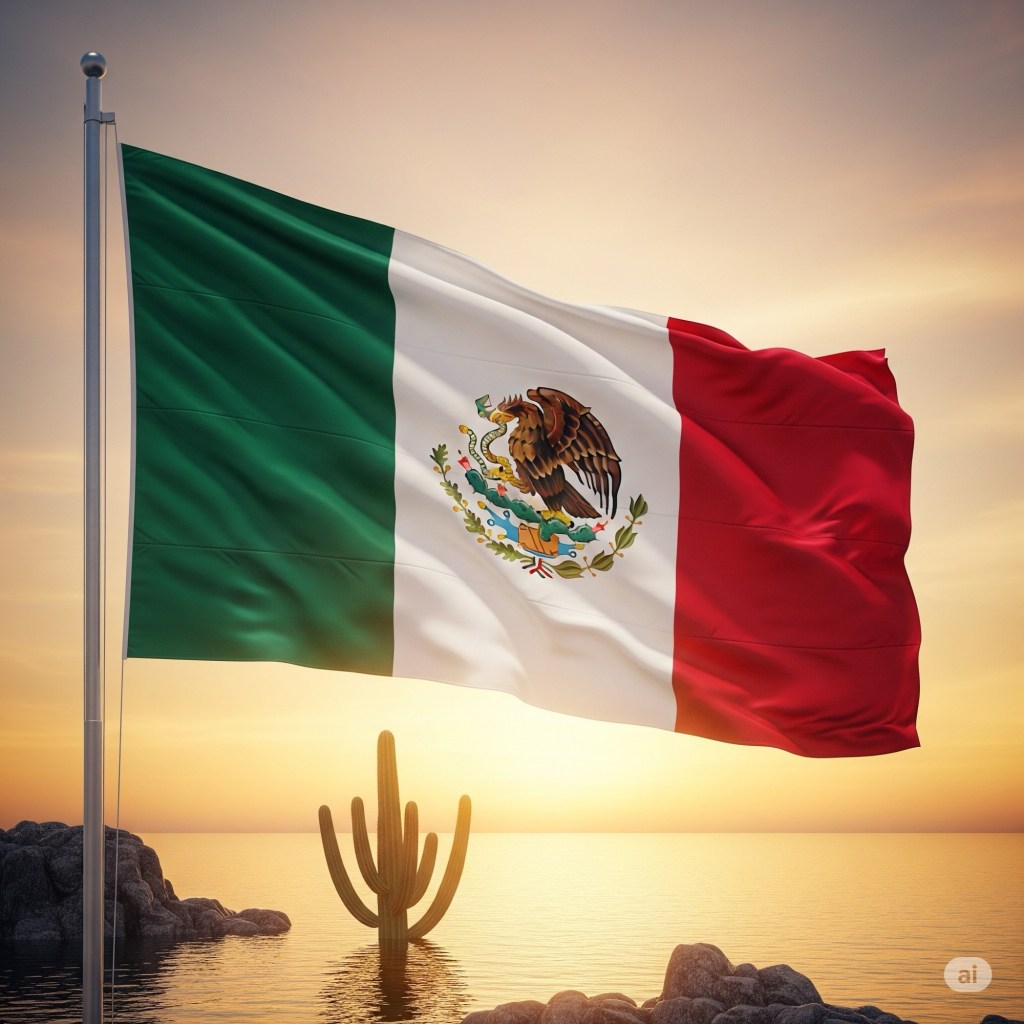
Today, I’m taking you on a deep dive into one of the most compelling and culturally rich names on the planet: México. For me, it’s more than just a modern label; it’s a vibrant echo of ancient civilizations, carrying layers of meaning from the Nahuatl language.
For anyone who’s explored even a little about Mexican history, it’s no secret that our country’s very identity is steeped in its indigenous heritage, particularly that of the Mexica people (incorrectly called Aztecs). And at the heart of this identity lies the name itself, a linguistic treasure born from Nahuatl, the language of the powerful empire centered at Mexico-Tenochtitlán.


But what does “México” really mean? It’s more complex than you might think, with two prominent theories that offer incredible insights into the worldview of its original inhabitants.
Theory 1: The Ombligo de la Luna (Mēxihco)
This is perhaps the most poetic and widely accepted interpretation, and one that resonates deeply with me. According to this school of thought, the name “México” derives from the Nahuatl word Mēxihco. Let’s break it down:

  • Mētztli: Means “moon.”
  • Xīctli: Translates to “navel,” “center,” or “belly button.”
  • -co: A locative suffix meaning “place in” or “where.”

  • Put it all together, and we get “Lugar en el ombligo de la luna” or “In the center of the lake of the moon.” I imagine the ancient city of Tenochtitlán, nestled in the vast Lake Texcoco. For the Mexica, this great lake was often depicted with a shape resembling a rabbit, which in turn was associated with the moon in their cosmology. So, the name beautifully captures the geographical and spiritual heart of their world. It’s a stunning image of centrality and connection to the cosmos.

  • Theory 2: El Lugar de Mexi (Mēxihco)

    Another compelling theory that I find equally fascinating suggests a more direct, yet equally significant, origin. This perspective posits that Mēxihco comes from Mexitli or Mexi, believed to be a secret name or epithet for Huitzilopochtli, the formidable Mexica patron deity of war, sun, and sacrifice. Alternatively, it could refer to a legendary leader or priest-king named Mexi, who guided the Mexica people to the promised land where Tenochtitlán was founded.
    In this context, Mēxihco would translate to “Place of Mexi” or “Land of Mexihtli.” This interpretation highlights the profound religious and ancestral reverence held by the Mexica for their divine protector or their foundational leader. It speaks to a deep sense of identity tied to their sacred history and the guidance that led them to establish their grand empire.
    Two Interpretations, One Profound Heritage
    While scholars continue to debate and refine these interpretations, both theories showcase the incredible depth and precision of the Nahuatl language. They aren’t mutually exclusive; rather, they offer different lenses through which we can appreciate the foundational beliefs and geographical understanding of the Mexica people.
    Preserving the Past: Our Diligent Efforts
    It’s truly remarkable how we, the Mexican people, through generations, have diligently and studiously preserved these linguistic and historical treasures. This isn’t just academic curiosity; it’s a living part of our national identity.
  • Education: From primary schools to universities, the history and culture of indigenous peoples are integral to our curriculum.
  • Cultural Institutions: Our museums, archives, and cultural centers tirelessly work to conserve ancient texts, artifacts, and oral traditions.
  • Linguistic Studies: Renowned Nahuatlato scholars, linguists, and historians dedicate their lives to studying, teaching, and reviving Nahuatl and other indigenous languages. Their tireless efforts ensure that the intricate grammar, rich vocabulary, and profound philosophical underpinnings of these languages are not lost. These dedicated experts, building on centuries of scholarship, are the guardians of this knowledge, meticulously analyzing ancient codices and modern narratives alike.
  • Everyday Pride: You can see it in our art, music, festivals, and the everyday pride many of us have in our pre-Hispanic roots. The very name of our country is a daily reminder of this powerful connection.
    For me, the etymological journey of “México” is a testament to the enduring legacy of the Mexica people and the vibrant tapestry of our culture. It’s a name that isn’t just pronounced, but felt—a profound echo of a magnificent past that continues to shape our present.


25 de junio de 2025 Jairo Bonilla


¿Alguna vez te has detenido a pensar en las increíbles historias que se esconden en los nombres de los lugares? Hoy, te llevaré a una inmersión profunda en uno de los nombres más cautivadores y culturalmente ricos del planeta: México. Para mí, es mucho más que una etiqueta moderna; es un eco vibrante de civilizaciones antiguas, que lleva capas de significado de la lengua náhuatl.


Para cualquiera que haya explorado un poco la historia de México, no es ningún secreto que la identidad misma de nuestro país está impregnada de su herencia indígena, particularmente la del pueblo Mexica (incorrectamente llamado Azteca). Y en el corazón de esta identidad yace el nombre mismo, un tesoro lingüístico nacido del náhuatl, la lengua del poderoso imperio centrado en México-Tenochtitlán.


Pero, ¿qué significa “México” realmente? Es más complejo de lo que podrías pensar, con dos teorías prominentes que ofrecen conocimientos increíbles sobre la cosmovisión de sus habitantes originales.


Teoría 1: El Ombligo de la Luna (Mēxihco)
Esta es quizás la interpretación más poética y ampliamente aceptada, y una que resuena profundamente conmigo. Según esta escuela de pensamiento, el nombre “México” deriva de la palabra náhuatl Mēxihco. Desglosemos sus partes:

  • Mētztli: Significa “luna”.
  • Xīctli: Se traduce como “ombligo”, “centro” o “corazón”.
  • -co: Un sufijo locativo que significa “lugar en” o “donde”.

  • Juntando todo, obtenemos “Lugar en el ombligo de la luna” o “En el centro del lago de la luna”. Me imagino la antigua ciudad de Tenochtitlán, anidada en el vasto lago de Texcoco. Para los Mexicas, este gran lago a menudo se representaba con una forma que recordaba a un conejo, el cual, a su vez, estaba asociado con la luna en su cosmología. Así, el nombre captura bellamente el corazón geográfico y espiritual de su mundo. Es una imagen impresionante de centralidad y conexión con el cosmos.
    Teoría 2: El Lugar de Mexi (Mēxihco)
    Otra teoría convincente que encuentro igualmente fascinante sugiere un origen más directo, pero igualmente significativo. Esta perspectiva postula que Mēxihco proviene de Mexitli o Mexi, que se cree era un nombre secreto o epíteto de Huitzilopochtli, la formidable deidad patrona mexica de la guerra, el sol y el sacrificio. Alternativamente, podría referirse a un líder legendario o sacerdote-rey llamado Mexi, quien guió al pueblo Mexica a la tierra prometida donde se fundó Tenochtitlán.
    En este contexto, Mēxihco se traduciría como “Lugar de Mexi” o “Tierra de Mexihtli”. Esta interpretación destaca la profunda reverencia religiosa y ancestral que los Mexicas sentían por su protector divino o por su líder fundador. Habla de un profundo sentido de identidad ligado a su historia sagrada y a la guía que los llevó a establecer su gran imperio.
    Dos Interpretaciones, Una Herencia Profunda
    Si bien los estudiosos continúan debatiendo y refinando estas interpretaciones, ambas teorías muestran la increíble profundidad y precisión de la lengua náhuatl. No son mutuamente excluyentes; más bien, ofrecen diferentes lentes a través de las cuales podemos apreciar las creencias fundamentales y la comprensión geográfica del pueblo Mexica.
    Preservando el Pasado: Nuestros Esfuerzos Diligentes
    Es verdaderamente notable cómo nosotros, el pueblo mexicano, a través de generaciones, hemos preservado con diligencia y estudio estos tesoros lingüísticos e históricos. Esto no es solo curiosidad académica; es una parte viva de nuestra identidad nacional.
  • Educación: Desde las escuelas primarias hasta las universidades, la historia y la cultura de los pueblos indígenas son parte integral de nuestro plan de estudios.
  • Instituciones Culturales: Nuestros museos, archivos y centros culturales trabajan incansablemente para conservar textos antiguos, artefactos y tradiciones orales.
  • Estudios Lingüísticos: Renombrados estudiosos nahuatlatos, lingüistas e historiadores dedican sus vidas a estudiar, enseñar y revivir el náhuatl y otras lenguas indígenas. Sus incansables esfuerzos aseguran que la intrincada gramática, el rico vocabulario y los profundos fundamentos filosóficos de estas lenguas no se pierdan. Estos expertos dedicados, basándose en siglos de erudición, son los guardianes de este conocimiento, analizando meticulosamente tanto los códices antiguos como las narrativas modernas.
  • Orgullo Cotidiano: Se puede ver en nuestro arte, música, festivales y el orgullo cotidiano que muchos de nosotros sentimos por nuestras raíces prehispánicas. El nombre mismo de nuestro país es un recordatorio diario de esta poderosa conexión.

  • Para mí, el viaje etimológico de “México” es un testimonio del legado perdurable del pueblo Mexica y del vibrante tapiz de nuestra cultura. Es un nombre que no solo se pronuncia, sino que se siente, un eco profundo de un pasado magnífico que continúa moldeando nuestro presente.