Find me on Vimeo
Jairo “Jay” Bonilla: A proud native of New York City, my creative world is a sophisticated blend of writing, visuals, and music.
My visual journey began at Graphic Communication Arts High School for photography and videography, further honed through specialized trade school at the International Center of Photography (ICP) on 42nd Street and 6th Avenue, across from iconic Bryant Park. As a blogger-musician and visual storyteller, I craft diverse and impactful video content. Here, you’ll find politically-driven video essays designed to spark critical thinking, ignite passion for activism, and encourage taking a firm stance for our country’s freedoms. My music, rooted in a classical upbringing, primarily revolves around my lifelong instrument: an upright acoustic piano, which I love to showcase through unique visual and auditory experiences.
Every video is accompanied by my elaborate, detailed blog insights, stemming from 10 years of blogging on WordPress, inviting you into the deeper context and creative process behind the content.
This platform, celebrated for its high-quality video and vibrant community, is the perfect space for concentrated group effort. I’m eager to connect with fellow creators, innovators, and thinkers. Let’s collaborate, challenge ideas, and amplify our collective impact.
Vimeo: Where video comes to life.






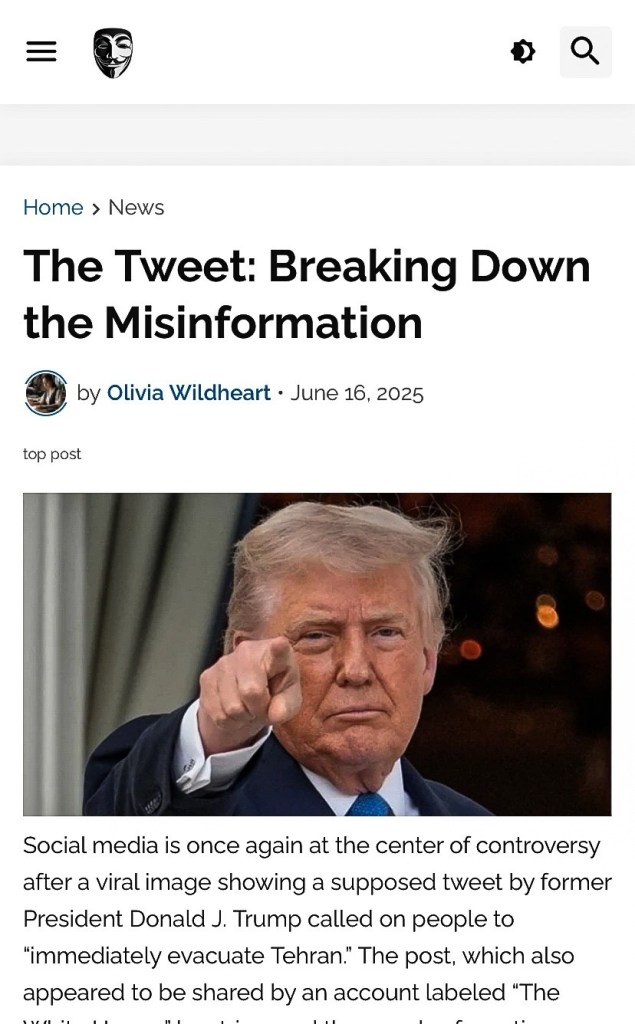
The Tweet: Breaking Down the Misinformation
by Olivia Wildheart•June 16, 2025
Social media is once again at the center of controversy after a viral image showing a supposed tweet by former President Donald J. Trump called on people to “immediately evacuate Tehran.” The post, which also appeared to be shared by an account labeled “The White House,” has triggered thousands of reactions… but it turns out the tweet never actually happened. In today’s age of artificial intelligence, deepfakes, and rapid misinformation, it’s easier than ever for a fake image to look real. That’s exactly what seems to have happened here. What Did the Tweet Claim?The viral image claims Trump wrote:“Iran should have signed the ‘deal’ I told them to sign. What a shame, and waste of human life. Simply stated, IRAN CAN NOT HAVE A NUCLEAR WEAPON. I said it over and over again! Everyone should immediately evacuate Tehran!” The post was shown as being liked and shared hundreds of thousands of times, giving it an illusion of credibility and virality. 🚨No evidence exist.As of this writing, there is no verified record of Donald Trump posting that message on X (formerly Twitter)—either on his current active accounts or archived ones. Neither has the official White House or any government communication channels released this post. In fact, basic reverse image searches and tweet history tools reveal that no such tweet has ever existed. That confirms the tweet is fabricated, likely created using simple image editing software or AI-generated layouts.
This isn’t an isolated case. Political misinformation is now more dangerous than ever thanks to tools that can clone fonts, layout, verification symbols, and even engagement stats.
A fake tweet like this can:
- Cause public panic (especially with phrases like “evacuate Tehran”)
- Influence public opinion with disinformation
- Undermine trust in public institutions
- Escalate international tensions
🧠 Why People Believe It
There are three key reasons why people fall for fake tweets:
- Emotional wording – Bold words like “nuclear weapon” and “evacuate” trigger fear.
- Familiar faces – If it looks like Trump or the White House account, it feels credible.
- Fake engagement – Likes and shares shown in the screenshot give the post an illusion of popularity and legitimacy.
Platforms like X (Twitter), Facebook, and Instagram are taking stronger steps to fight misinformation, but it’s also up to everyday users to question what they see.
Final Thoughts
Fake political tweets aren’t just annoying… they dangerous. People need to check what they share before clicking that retweet button. We must slow down and think before we spread content that can harm others or make a situation worse.
And while tech is powerful, we also needs more responsible users. If you see a suspicious post, don’t stay quiet—report it, or better yet, educate someone else.