- Introduction:
- The Fox Takedown Campaign Overview
The Fox Takedown campaign is a prominent grassroots, non-violent protest movement explicitly targeting Rupert Murdoch’s Fox News. The campaign consistently refers to its primary target as “Fox News” and “Trump State TV,” framing its efforts as a direct response to what it perceives as a pervasive source of right-wing propaganda. The campaign’s central online presence is the ‘foxtakedown.com’ URL, which serves as a hub for its national activities and messaging.
At its core, the campaign articulates an overarching goal: to actively combat the spread of disinformation and to promote truth and mutual understanding as essential paths forward for American society. It asserts that for nearly four decades, Rupert Murdoch’s network has “lied to the American people, brainwashing millions and setting the stage for a GOP billionaire coup”. This foundational understanding of the campaign’s identity, its primary target, and its commitment to non-violence establishes the context for a detailed examination of its operations and impact. - Campaign Genesis and Evolution
2.1. Origins of the ‘Truth Tuesdays’ Movement
The Fox Takedown campaign is explicitly presented as a nationwide extension of an earlier, more localized initiative known as “Truth Tuesdays”. This foundational group commenced its protests at the Fox News Headquarters in New York City, specifically located at 6th Avenue and 48th Street in Manhattan. These protests have been a consistent, weekly activity, occurring every Tuesday since August 2021. The campaign’s direct lineage from this specific, regular, localized protest action in New York City provides a concrete starting point and demonstrates a sustained effort over time.
The deliberate naming of “Truth Tuesdays” as the campaign’s precursor and a central activity positions the movement as a direct counter-narrative to the perceived erosion of factual reporting. This strategic choice aims to leverage broader societal concerns about media integrity, elevating the campaign’s mission beyond mere political opposition to a fundamental defense of fact-based discourse. The term “truthiness,” for instance, coined by Stephen Colbert in 2005, became a widely recognized concept in U.S. politics, reflecting a growing hostility toward factual reporting and fact-based discussion. The campaign’s nomenclature appears to directly engage with this historical context, seeking to restore what it perceives as factual integrity in the public sphere.
2.2. Establishment as a National Campaign
The strategic expansion of “Truth Tuesdays” into a broader national action campaign is characterized by its encouragement for individuals to “Start a protest where you live — any day of the week”. This decentralization empowers local activism, allowing the movement to extend its reach far beyond a single protest point. The campaign provides practical support to facilitate these local actions, notably through its “Find a Fox Station” tool, which aids participants in locating local Fox stations and affiliates. The campaign explicitly claims these local stations “fund Fox Lies,” thereby identifying specific targets for localized pressure.
The campaign’s operational structure reveals a sophisticated hybrid model, combining the agility and broad reach of grassroots, decentralized activism with the strategic direction and resource provision typically associated with more centralized organizations. While participants are encouraged to initiate protests locally, the campaign also maintains a central online presence through its website (foxtakedown.com) and Action Network group, as well as linked Bluesky accounts. These central platforms offer consistent messaging, downloadable resources such as signs and flyers, and “Know Your Rights” information pertaining to First Amendment protections for protest. This dual approach allows for widespread local participation and adaptability to regional contexts, while ensuring the core message remains unified. Such a model enhances the campaign’s resilience and reach, as it does not solely depend on a single point of failure and can leverage a broader base of activists for both general awareness and targeted local pressure. - Core Objectives and Strategic Approaches
3.1. Stated Goals and Underlying Motivations
The Fox Takedown campaign articulates its objectives in strong, declarative language, reflecting its deep-seated grievances and ambitious aims. Its explicitly stated goals include directly telling Fox to “STOP HURTING AMERICA” and pushing back against what it describes as “the most destructive immigrants to ever hit our shores – Rupert Murdoch and Elon Musk!”. This highlights a focus on specific influential figures perceived as central to the problem. Furthermore, the campaign aims to actively combat the spread of disinformation and challenge the concentration of wealth that it believes is used for this purpose. Ultimately, it seeks to promote truth and mutual understanding as the fundamental path forward for society.
The campaign’s core assertion is that Rupert Murdoch’s network has systematically “lied to the American people, brainwashing millions and setting the stage for a GOP billionaire coup” for nearly four decades. This provides the historical context for their grievances, suggesting a long-standing pattern of perceived harm. The campaign’s rhetoric consistently employs highly charged and urgent language, positioning its targets not merely as political adversaries but as fundamental threats to the nation’s well-being and democratic foundations. Assertions such as “Fox News made the GOP’S Trump/Musk coup possible!” and “Fox is TRUMP STATE TV – full stop” exemplify this approach. This narrative strategy is designed to galvanize a broad base of support, imbuing the campaign with a moral imperative by appealing to shared values perceived to be under attack. This approach is a powerful tool in modern activism, as it seeks to create a sense of urgency and moral obligation among potential supporters, fostering deeper engagement and commitment.
3.2. Non-Violent Methods and Tactics Employed
A defining characteristic of the Fox Takedown campaign is its explicit and unwavering commitment to non-violent protest and de-escalation tactics. The campaign unequivocally states that it “do[es] not condone: acts of violence, property damage, or personal targeting of individuals working for Fox”. This adherence to non-violence is a core principle guiding all its activities.
The campaign employs a diverse range of methods to achieve its objectives:
Organizing Physical Protests: This includes the continuation of nationwide “Truth Tuesdays” at Fox affiliates and encouraging local demonstrations any day of the week. These are direct, visible forms of protest.
Providing Comprehensive Resources: To support its activists, the campaign offers “Signs and Flyers” for consistent messaging and crucial “Know Your Rights” information, emphasizing the First Amendment’s protection of the right to assemble and express views through protest.
Facilitating Actions from Home/Work: Beyond physical demonstrations, the campaign instructs supporters on how to call advertisers of Fox News to express concerns, how to ask for channel changes in public locations where Fox News might be playing, and how to “Unfox” cable boxes to remove or avoid the channel from personal viewing.
Selling Protest Gear: The campaign offers “Fox Lies fashions,” explicitly stating that 100% of proceeds go to an independent artist, and the movement itself does not make any profit, thereby maintaining a non-commercial stance.
The campaign’s diverse array of tactics, spanning from direct physical protests to indirect digital actions and influencing individual consumer behavior, indicates a comprehensive strategy for achieving systemic change. By simultaneously applying pressure across public, economic, and individual spheres, it aims to create a cumulative effect that can lead to systemic shifts in Fox News’s operations, its financial viability, or its public perception. This integrated strategy maximizes the potential for impact by addressing various vulnerabilities for Fox News, thereby increasing the likelihood of achieving its objectives through sustained, diverse pressure.
3.3. Primary Messages and Slogans
The core messages and slogans of the Fox Takedown campaign are direct, accusatory, and often provocative, encapsulating its grievances and objectives. These include:
“#FoxTakedown: Fox Lies, Democracy Dies”
“TELL FOX: STOP HURTING AMERICA”
“Fox News made the GOP’S Trump/Musk coup possible!”
“Fox is TRUMP STATE TV – full stop.”
“Push back against the most destructive immigrants to ever hit our shores – Rupert Murdoch and Elon Musk!”
“#TruthOverFox”
Despite these critical messages, the campaign also reiterates a stated belief in the capacity for people to learn, grow, and change, and a conviction that truth and mutual understanding are the ultimate way forward. This provides a hopeful counterpoint to their otherwise critical and confrontational messages.
Table 1: Fox Takedown Campaign: Stated Goals, Methods, and Primary Messages
Category Description
Stated Goals – To tell Fox to “STOP HURTING AMERICA”
– To push back against “the most destructive immigrants to ever hit our shores – Rupert Murdoch and Elon Musk!”
– To combat the spread of disinformation and the concentration of wealth used for this purpose
– To promote truth and mutual understanding as the path forward
Methods – Organizing Protests: Nationwide “Truth Tuesdays” (since August 2021 in NYC) and encouraging local protests “any day of the week”
– At-Home/Work Actions: Calling Fox News advertisers, asking to change channels in public, “Unfoxing” cable boxes
– Providing Resources: “Signs and Flyers” for messaging, “Know Your Rights” information
– Other: Selling “Fox Lies fashions” (proceeds to artist, no campaign profit)
Primary Messages/Slogans – “#FoxTakedown: Fox Lies, Democracy Dies”
– “TELL FOX: STOP HURTING AMERICA”
– “Fox News made the GOP’S Trump/Musk coup possible!”
– “Fox is TRUMP STATE TV – full stop.”
– “Push back against the most destructive immigrants to ever hit our shores – Rupert Murdoch and Elon Musk!”
– “#TruthOverFox”
- Key Actors and Organizational Landscape
4.1. Founding Entities and Associated Groups
While the Fox Takedown campaign is frequently described as a “grassroots” movement, fostering a perception of broad, decentralized public uprising , a closer examination reveals significant organizational support and close associations with established progressive entities. This blend suggests that the “grassroots” appeal is strategically complemented by the professional support, media amplification, and organizational infrastructure provided by these larger groups.
MeidasTouch: This is a prominent American progressive media company, founded in March 2020 by three brothers: Ben, Brett, and Jordan Meiselas. Initially established as a Political Action Committee (PAC) with the explicit purpose of preventing Donald Trump’s reelection, it later transitioned into a news network (MeidasTouch Network), with Ron Filipkowski serving as its editor-in-chief. MeidasTouch’s self-description as “pro-democracy” journalism and its strong social media presence, including 5.0 million YouTube subscribers and 2.4 million TikTok followers , align closely with and likely amplify the Fox Takedown campaign’s objectives and messaging.
Media Matters for America: Founded by David Brock, this media watchdog organization has a long-standing focus on exposing and countering conservative media, with a particular emphasis on Fox News. Brock himself has stated that Fox “morphed into something that isn’t even recognizable as a form of media”. Media Matters’ active role in protesting outside Fox News Headquarters and targeting its advertisers directly mirrors and reinforces key methods employed by the Fox Takedown campaign.
The 50501 Movement:
The @50501newyork.bsky.social Bluesky account, which identifies itself as the official New York account for the broader @50501movement.bsky.social, actively promotes Fox Takedown events and nationwide “Days of Action”. This indicates a close alliance or shared network, suggesting that Fox Takedown may operate as a specific initiative within a larger, interconnected progressive movement.
This trend highlights the evolving landscape of modern social activism, where successful movements often blend authentic popular sentiment with strategic, well-resourced organizational backing. This professionalization is crucial for their longevity, ability to execute complex tactics like advertiser boycotts, and sustained influence on public discourse.
4.2. Local Organizers and Affiliates
The campaign operates within a highly networked activist ecosystem, allowing for effective localization and amplification by diverse progressive organizations. The core strategy encourages individuals to “Start a protest where you live” and provides tools to locate local Fox stations. This adaptability enhances the campaign’s overall effectiveness and geographic reach, as it leverages existing local activist networks and permits tailored strategies that resonate with regional grievances, while still contributing to the overarching national objective.
Specific local groups and individuals are actively involved in organizing Fox Takedown and related events across the country:
Indivisible BaltCo:
This local chapter of the broader Indivisible movement is explicitly identified as organizing “FOX TAKEDOWN BALTIMORE: Boycott Billionaire David Smith’s Business Empire”. This demonstrates a localized adaptation of the campaign’s methods, targeting specific regional business interests linked to Fox, such as restaurants and the MileOne Autogroup, which are part of the “David Smith Empire”. Indivisible BaltCo also organizes other boycott actions.
“No Jefferson” / “Co Fox Takedown”: These entities are listed as creators or sponsors for “Fox Takedown – Fox 31” events in Denver, Colorado. These events are scheduled for various Saturdays in July, August, and September 2025.
Broader Mobilize.us Network: The Mobilize.us platform, used for organizing events, showcases a wider network of progressive and Democratic-aligned groups (e.g., Charleston County Democratic Party, Swing Left, Markers For Democracy, Cat Ladies for America). While not all directly Fox Takedown, some of these groups organize events using similar “takedown” terminology (e.g., “AMAZON-DRY JULY: #Takedown Bezos’ Prime Days profits w/ Target Majority NYC” ), suggesting a shared tactical lexicon and potential for collaboration within a broader progressive ecosystem. This allows for specific, targeted actions that contribute to the overarching national objective.
Table 2: Key Organizations and Individuals Associated with Fox Takedown
Organization/Individual Role/Connection to Fox Takedown Relevant Snippet IDs
MeidasTouch (Ben, Brett, Jordan Meiselas, Ron Filipkowski) Progressive media company; “pro-democracy” journalism; founded as PAC to stop Trump’s reelection; amplifies Fox Takedown messaging and objectives.
Media Matters for America (David Brock) Media watchdog organization; long-standing focus on exposing conservative media, particularly Fox News; organizes protests targeting Fox News and its advertisers.
The 50501 Movement (@50501newyork.bsky.social) Affiliated progressive movement; official NY account promotes Fox Takedown events and nationwide “Days of Action” on Bluesky.
Indivisible BaltCo Local chapter of Indivisible movement; organizes “FOX TAKEDOWN BALTIMORE” and “Don’t Feed the Fox” boycotts targeting local businesses linked to Fox.
“No Jefferson” / “Co Fox Takedown” Event creators/sponsors for “Fox Takedown – Fox 31” protests in Denver, CO.
Action Network Platform used by Fox Takedown and affiliated groups to organize and promote events and campaigns.
Mobilize.us Platform used by affiliated progressive groups (e.g., Indivisible, Charleston County Democratic Party) to organize events, some using “takedown” terminology.
- Geographic Reach and Protest Activities
5.1. Nationwide Presence and Key Protest Locations
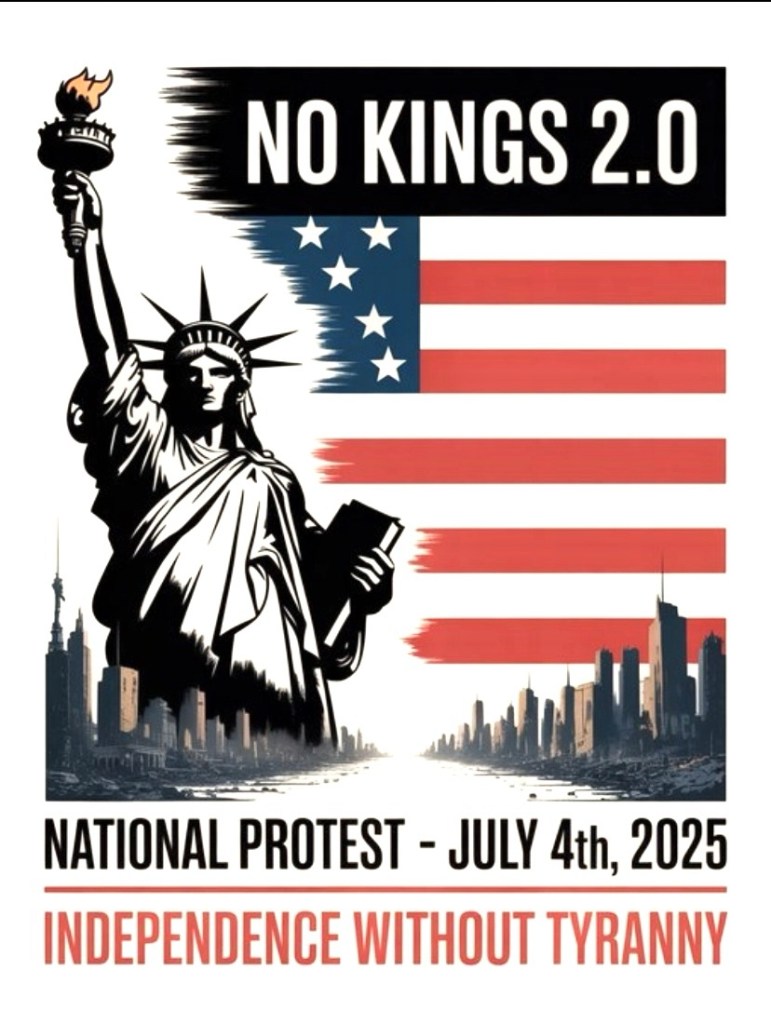
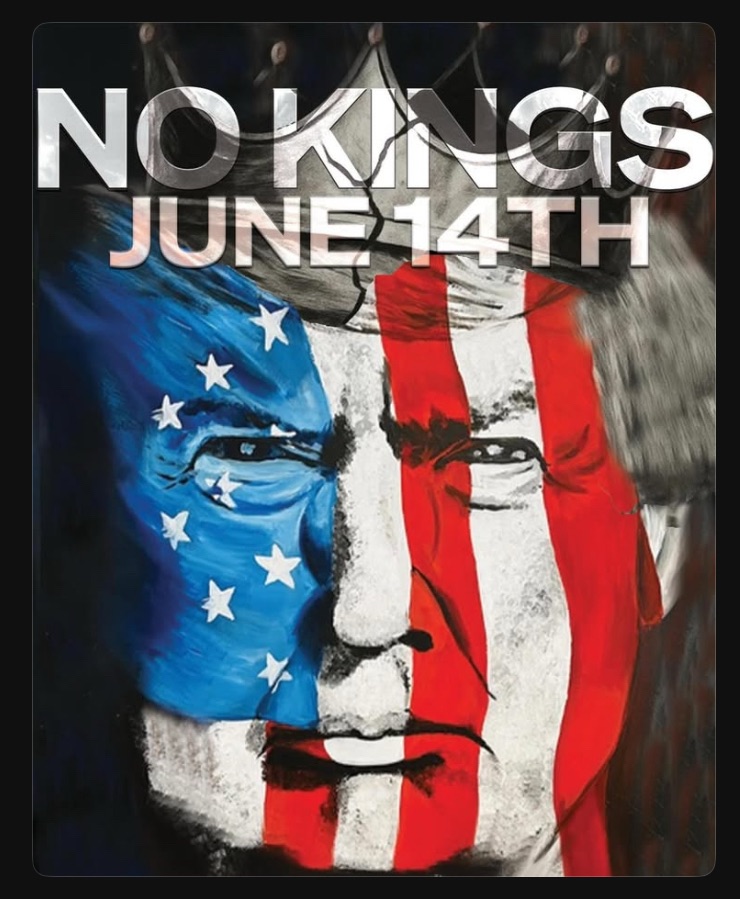
The Fox Takedown campaign, alongside its closely related movements, demonstrates a significant national scope. “Truth Tuesdays” serves as a consistent core activity, based in Manhattan, New York City, and has been ongoing every Tuesday since its inception in August 2021. Beyond this central hub, Fox Takedown events or closely related “takedown” protests (such as “Tesla Takedown” and “No Kings Day”) have been documented in numerous cities and regions across the United States.
Key protest locations include:
New York City (Manhattan): The primary and ongoing site for regular “Truth Tuesdays” protests at Fox News Headquarters.
Denver, CO: Explicitly listed as a location for “Fox Takedown” events at Fox 31 Studios, with specific dates planned in July 2025 and June 2025.
Baltimore, MD: Home to “Don’t Feed the Fox” boycotts and “FOX TAKEDOWN BALTIMORE” events, indicating localized efforts targeting the “David Smith Empire”.
Los Angeles, CA: Mentioned in the context of “No Kings” and “Tesla Takedown” protests.
Chicago, IL: A significant location for “No Kings” protests, demonstrating large-scale anti-Trump demonstrations.
Philadelphia, PA: Hosted the “flagship” “No Kings Day” protest, drawing large crowds of over 60,000 attendees.
Santa Clara, CA: Site of a “Tesla Takedown” rally, highlighting the anti-Musk component of the broader “takedown” narrative.
Washington D.C.: Hosted “Tesla Takedown” protests, further connecting the anti-Musk and anti-Trump narratives.
Boston, MA: Involved in “No Kings” protests, sometimes integrated with other public events like Pride parades.
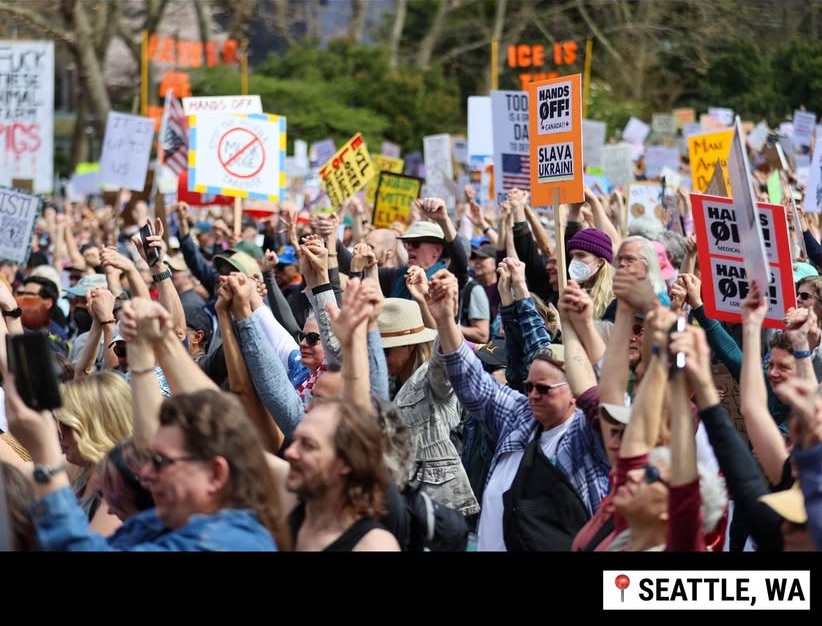
Seattle, WA: Mentioned in relation to both “No Kings” and “Tesla Takedown” protests, showing a consistent presence for these aligned movements.
Other Tesla Takedown locations: The “Tesla Takedown” movement alone reported protests in over 200 locations nationwide and over 250 cities worldwide, including Walnut Creek, Vallejo, Dublin (CA), San Francisco, Berkeley, Minneapolis, Kansas City, Columbus (OH), and Florida.
5.2. Specific Examples of Demonstrations and Actions
The protests are consistently characterized by their non-violent nature, often involving the display of signs, chanting slogans, and sometimes incorporating elements like music or dance, such as a dance party at a Tesla store in Washington D.C.. The Fox Takedown campaign’s explicit and unwavering commitment to non-violence is paired with a sophisticated understanding of the spectrum of non-violent resistance. Its methods are highly varied, encompassing traditional street protests, economic pressure tactics, and individual consumer actions. This comprehensive array of tactics allows for participation at various levels of engagement, maximizing opportunities for broad involvement and impact.
Specific types of actions undertaken by the campaign and its affiliates include:
Physical Protests and Rallies: These are direct demonstrations held outside Fox News Headquarters in Manhattan and at various local Fox affiliates across the country.
Economic Boycotts: Targeted actions aimed at applying financial pressure, such as calling advertisers of Fox News and boycotting businesses owned by figures perceived as supporting Fox’s agenda, like the “David Smith Empire” in Baltimore.
Public Channel Changes: Encouraging individuals to actively request that Fox News be changed to another channel in public locations like bars or gyms, aiming to reduce its public visibility and normalize its rejection.
“Unfoxing” Cable Boxes: Promoting actions that individuals can take to remove or actively avoid Fox News from their personal cable viewing, representing a direct consumer-level disengagement.
This approach highlights the evolving nature of modern social movements, which increasingly integrate diverse forms of activism to achieve their goals, moving beyond singular protest events to sustained, multi-faceted campaigns that aim to influence public opinion, economic behavior, and social norms.
Table 3: Notable Fox Takedown Protest Locations and Dates (Direct & Related)
Location Type of Protest/Campaign Key Dates/Frequency Relevant Snippet IDs
Manhattan, NYC Truth Tuesdays, Fox Takedown Every Tuesday since August 2021
Denver, CO Fox Takedown (at Fox 31 Studios) July 12, 2025; June 28, 2025; other Saturdays in 2025
Baltimore, MD Don’t Feed the Fox, Fox Takedown Baltimore Ongoing boycotts, specific launch meetings
Santa Clara, CA Tesla Takedown Saturday, specific date not given
Washington D.C. Tesla Takedown March 29, 2025
Los Angeles, CA No Kings, Tesla Takedown June 2025 (No Kings)
Chicago, IL No Kings Day of Defiance June 14, 2025
Philadelphia, PA No Kings Day June 14, 2025
Boston, MA No Kings June 2025
Seattle, WA No Kings, Tesla Takedown June 23, 2025 (Iran protest), general presence
Various US cities Tesla Takedown February 15, 2025 – present (over 200 locations)
- Public Messaging and Narrative Framing
The Fox Takedown campaign’s public messaging is characterized by its directness, strong accusatory language, and a clear narrative framing that positions Fox News as a detrimental force to American democracy. Core slogans like “#FoxTakedown: Fox Lies, Democracy Dies” and “TELL FOX: STOP HURTING AMERICA” immediately convey the campaign’s central grievances. The campaign explicitly links Fox News to political events, asserting that “Fox News made the GOP’S Trump/Musk coup possible!” and declaring “Fox is TRUMP STATE TV – full stop”. This messaging aims to establish a clear causal link between Fox News’s content and perceived negative political outcomes.
The campaign’s narrative extends to identifying specific individuals, such as Rupert Murdoch and Elon Musk, as “the most destructive immigrants to ever hit our shores”. This rhetorical strategy is designed to personalize the perceived threat and mobilize opposition against key figures. Despite this confrontational stance, the campaign also includes a message of hope and belief in positive change, stating its conviction in “the capacity for people to learn, grow, and change” and that “truth and mutual understanding are the way forward”. This dual approach—sharp criticism paired with an optimistic vision—aims to both galvanize action and articulate a desired future state. The consistent use of hashtags like “#TruthOverFox” further reinforces the campaign’s core struggle between perceived falsehoods and factual integrity.
Conclusion
The Fox Takedown campaign is a multifaceted and strategically organized non-violent protest movement with a clear objective: to counter the influence of Fox News, which it views as a purveyor of disinformation and a threat to American democracy. Originating from the consistent “Truth Tuesdays” protests in New York City, the campaign has successfully scaled into a national initiative, empowering individuals to take action locally while benefiting from centralized resources and strategic direction.
The campaign’s operational model, which combines grassroots mobilization with the backing of professional progressive organizations like MeidasTouch and Media Matters for America, enables it to exert pressure through diverse channels. These include traditional street protests at Fox affiliates, economic boycotts targeting advertisers and associated businesses, and individual consumer actions aimed at reducing Fox News’s visibility and reach. This integrated approach reflects a sophisticated understanding of how to apply multi-channel pressure for systemic change, addressing various vulnerabilities of its target.
The campaign’s public messaging is characterized by its direct and urgent framing of Fox News and its associated figures as existential threats to the nation’s well-being. This narrative strategy seeks to transcend conventional political partisanship by appealing to fundamental values related to truth and democracy. While employing strong, accusatory language, the campaign maintains an explicit commitment to non-violence and articulates a hopeful vision for a society built on truth and mutual understanding. The Fox Takedown campaign thus stands as a contemporary example of networked activism, demonstrating how movements can blend popular sentiment with organizational expertise to achieve sustained influence in the public discourse.
I’ll be There Next Tuesday Be Sure to Join me!