From Proper Nouns to Political Lexicon: A Deep Dive into Terminological Derivations

By Jay’s Insights

New York City, NY – July 4, 2025 – In the intricate tapestry of political discourse and historical analysis, certain names transcend their individual identity to become conceptual anchors. This phenomenon, where proper nouns morph into descriptive adjectives or substantive nouns, offers a fascinating glimpse into how language evolves to categorize and define complex societal and ideological phenomena. This article explores this linguistic transformation, drawing parallels between literary critique and contemporary political branding, a topic recently explored in depth.

The Genesis of “Orwellian“: A Literary Precedent

The term “Orwellian” serves as a quintessential example of a proper noun yielding a powerful descriptive adjective. Derived from the celebrated British author George Orwell (born Eric Arthur Blair), this adjective is intrinsically linked to the dystopian themes present in his seminal works, most notably Nineteen Eighty-Four. An “Orwellian” scenario typically evokes imagery of totalitarian control, pervasive surveillance, manipulated truth, and the suppression of individual liberties.

The adoption of “Orwellian” into the common lexicon demonstrates language’s capacity to distill complex literary constructs into a single, universally understood term. It allows for immediate comprehension of a specific type of societal or political oppression, echoing Orwell’s profound warnings about the dangers of unchecked power and the erosion of truth.

McCarthyism: A Historical and Ideological Marker

Shifting from the literary to the historical-political sphere, the term “McCarthyism” provides a potent example of a proper noun’s transformation into a descriptive noun. Named after Senator Joseph R. McCarthy, a prominent figure in American politics during the mid-20th century, “McCarthyism” denotes the practice of making accusations of disloyalty, subversion, or treason without sufficient evidence, often employing aggressive and unsubstantiated investigative tactics.
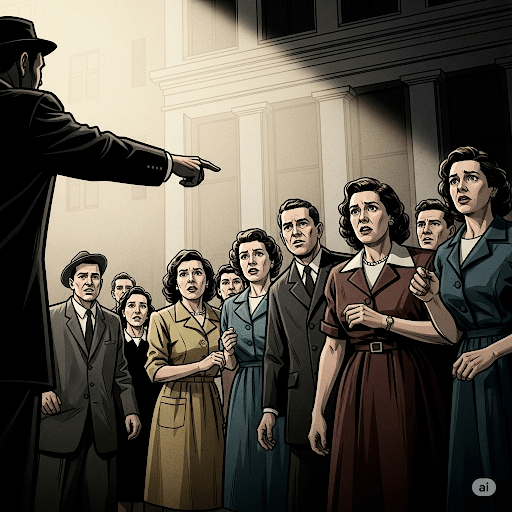
While the “McCarthy Era” refers to the specific historical period (roughly late 1940s to mid-1950s) characterized by heightened anti-communist paranoia in the United States, “McCarthyism” transcends this temporal boundary. It functions as a conceptual tool to describe any instance of ideological witch-hunts, suppression of dissent, or public denunciation based on flimsy evidence, regardless of the specific historical context. This distinction highlights how language differentiates between a chronological period and the enduring practices or ideologies that defined it.

Bidenomics and Trumpism: Contemporary Political Coinage

The phenomenon of deriving broader terms from proper nouns remains highly active in contemporary politics, as evidenced by “Bidenomics” and “Trumpism.”

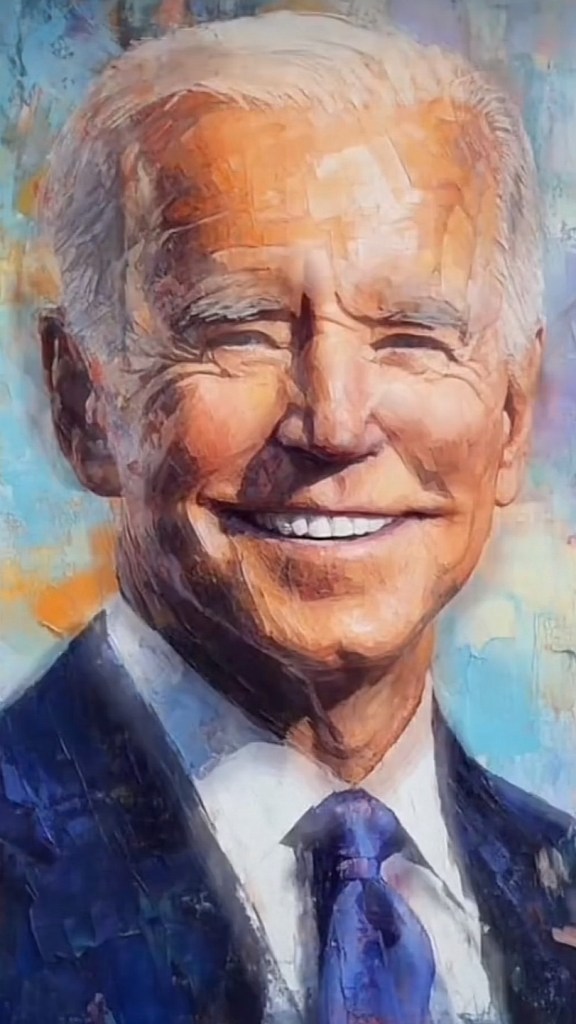
Bidenomics,” a portmanteau of “Biden” and “economics,” has been strategically adopted by the current U.S. administration to encapsulate President Joe Biden’s economic philosophy. This term describes a set of policies purportedly aimed at fostering economic growth from the “middle out and bottom up,” emphasizing investments in infrastructure, clean energy, and domestic manufacturing. Unlike a general descriptor like “Biden’s economic policies,” “Bidenomics” serves as a branded term, intended to create a distinct and recognizable identity for the administration’s economic agenda.

Similarly, “Trumpism” directly draws from the name of President Donald Trump to describe the political ideology, movement, and set of policies associated with him. Characterized by elements such as right-wing populism, nationalism, protectionism, and an “America First” foreign policy stance, “Trumpism” has become a widely used term to define a particular segment of modern conservative thought and a significant force within the Republican Party. Like “McCarthyism,” “Trumpism” represents an ideology or a set of practices, rather than simply a historical period.

Conclusion: Language as a Lens for Understanding

The linguistic journey from a proper noun to a descriptive adjective, a defining “-ism,” or a coined “-omics” term is more than a mere grammatical exercise. It reflects society’s continuous effort to categorize, understand, and communicate complex ideas, historical periods, and political ideologies succinctly. For graphic artists, designers, and bloggers like us, who constantly engage with and interpret visual and textual narratives, recognizing these linguistic transformations provides a deeper appreciation for the nuanced ways in which language shapes our perception of history, politics, and culture. It underscores the power of words to not only reflect reality but also to actively construct and brand it.

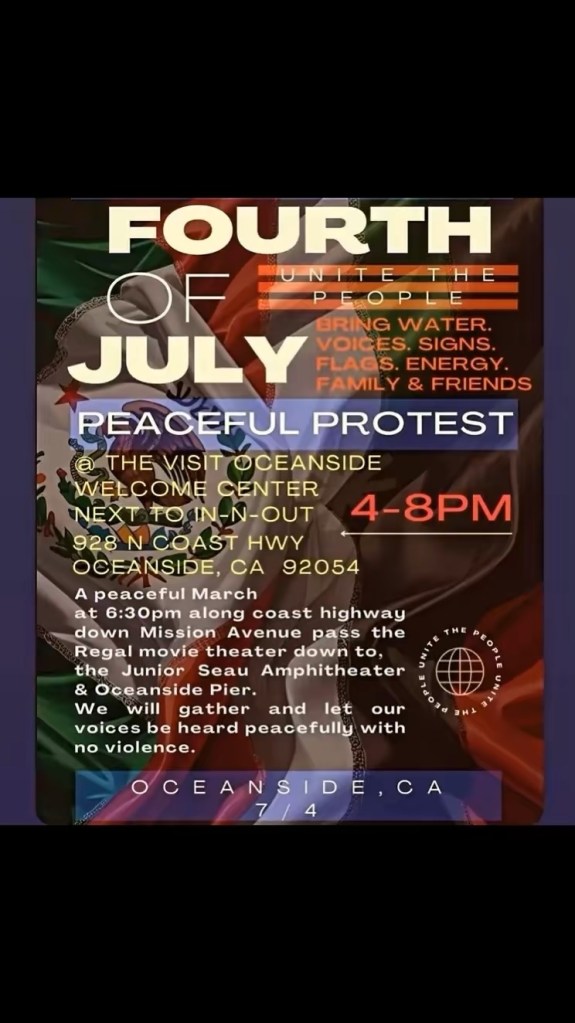
Happy Fourth of July, democracy is dead!

My Journey Through the Wonderland of Words: From Short to Super-Long! 

Jay here: 7/4/25

There’s no surprise that I, as an aspiring WordPress author, would be fascinated with words. I think that on WordPress, most people are fascinated with words, short and long. For me, this fascination has been a lifelong journey, a captivating evolution that started from a rather unique place.

You see, while I navigate the world speaking English now, my native tongue is Mexican Spanish. It wasn’t until I was prominently 12 years old that I truly began to discover English, and with it, the incredible depth and sometimes mind-boggling complexity of its vocabulary. It was around that time I first stumbled upon a word that, at the time, was widely considered the longest in the dictionary:

antidisestablishmentarianism.

Imagine being a pre-teen and wrapping your head around that! But I did. This formidable 28-letter word refers to the opposition to the disestablishment of the Church of England – essentially, being against separating the state church from government support. It’s a mouthful, for sure, but understanding its meaning felt like unlocking a secret level in the game of language.

My high school years brought an even deeper dive into the roots of language. I developed a heavy interest in learning Latin. Perhaps it was because of its clear parallels with Spanish, my first language, but I found it remarkably easy to grasp. It quickly became apparent that so many phrases we use daily in Spanish are direct descendants of Latin and other Romance languages. This connection, in turn, ignited a profound fascination within me for etymology – the study of the origin of words, how their meanings have evolved, and tracing them back to their earliest forms and geographical origins. It’s like being a linguistic detective!

Then, as I ventured into college, another lexical titan emerged to challenge my growing vocabulary. I encountered the next biggest word, a true 45-letter behemoth: 

pneumonoultramicroscopicsilicovolcanoconiosis.

Yes, you read that right. And before you try to pronounce it, remember it starts with a silent ‘P’! This colossal word describes a lung disease caused by the inhalation of very fine silica dust, often originating from volcanic ash. What makes this word even more fascinating, from a linguistic perspective, is that it wasn’t discovered in a dusty medical tome but was actually coined intentionally by Everett M. Smith, the then-president of the National Puzzlers’ League, in 1935 at their annual meeting. He specifically designed it to be the longest word in the English language, combining various Greek and Latin roots related to lungs, microscopic, silica, volcano, and disease. While it does refer to a legitimate lung condition, its creation as a linguistic stunt adds an incredible layer to its story.

My journey with words, from the short and sweet to these monumental linguistic creations, has been nothing short of incredible. It has shown me that language is a living, breathing entity, constantly evolving, borrowing, and expanding.

And for a blogger like me, there’s no greater joy than exploring its vast landscape, one fascinating word at a time.

What about you, my dear readers? What words have fascinated you on your own linguistic journeys? Share your thoughts in the comments below!

The “Celebrity” DM and the Anatomy of a Hack

Hey everyone, Jay here! Let’s talk about something that’s probably happened to you, too: that bizarre moment a “celebrity” slides into your DMs. 

Just yesterday, it hit me on TikTok. A “Susan Phillips” popped up, and my internal alarm bells started ringing. Real celebs on TikTok? They’ve got millions of followers and a content library deeper than the ocean. This “Susan Phillips”? Two videos, zero reposts. A classic fake account.

TikTok, Substack, and the “Fuckery” Factor

My TikTok run-in is just the latest. But if we’re talking about online “fuckery” and hacking, my time on Substack takes the cake. As fellow writers and bloggers, you know how personal our Substack newsletters are. The amount of bogus accounts trying to connect there, often masquerading as well-known authors or journalists, was truly wild. These experiences, across both platforms, have hammered home the need for serious vigilance.

Unpacking “Hack”: From Battlefield to Browser

This whole experience got me thinking about the word “hack” itself. We use it constantly in the digital world, but its origins are far grimmer and, frankly, fascinating.

Ever heard “that doctor is a hack” or “he’s a hack of a doctor”? That phrase comes from a brutal historical reality. In wartime, doctors sometimes had to perform emergency amputations with shocking speed and often little sanitation. They would literally “hack off” a limb to save a life. It was a crude, desperate, but sometimes necessary act.

And that’s precisely why the term resonates today. Just like those desperate, limb-hacking doctors, a modern computer hacker can, in a digital sense, “take” something from you. They might swipe your data, your identity, or simply your peace of mind with their deceptive tactics. They exploit vulnerabilities to gain unauthorized access or cause disruption.

Guarding Your Digital Turf: My Quick Checklist

So, how do we protect our online spaces? Whether you’re on WordPress, Substack, TikTok, or anywhere else, stay sharp.

 * Check the Numbers: Low follower counts and minimal content from a supposed big-name? Major red flag.

 * Trust Your Gut: If a message or profile feels off, it probably is. Don’t get star-struck; stay smart.

 * Never Share Personal Info: Real pros won’t randomly ask for your bank details or passwords. Ever.

 * Verification Helps (But Isn’t Foolproof): A blue checkmark is good, but its absence doesn’t automatically mean fake. Do your own quick research.

My own battles with impersonators—including a supposed TV personality from a popular reality show, a famous musician, and now “Susan Phillips”—have made me extra cautious. Your online safety and peace of mind are non-negotiable.

Let’s keep our digital world authentic, engaging, and free from these digital “hacks” trying to chip away at our peace. Have you had similar experiences? Share your stories below!


America The Beautiful

History, Health, expolitics, science, art, music, nature word events, news

Skip to content ↓