The Architecture of Defiance: A Chronological Analysis of Grassroots Mobilization and the “No Kings” Movement, 2016–2026
The decade spanning 2016 to 2026 represents a transformative era in the history of American civic engagement, characterized by the evolution of digital-first organizing into a global phenomenon of mass street mobilization. This period witnessed a fundamental shift in how political dissent is structured, moving from the spontaneous outbursts of earlier decades toward a highly professionalized, technologically integrated, and strategically patient framework of resistance. At the center of this evolution were two primary organizational pillars: the Indivisible movement, which provided the original tactical blueprint in the wake of the 2016 election, and the 50501 Movement, which emerged in late 2024 to channel a new wave of radical energy into a series of massive “No Kings” protests.
The culmination of this decadal trajectory occurred on March 28, 2026, when an estimated eight million individuals participated in a coordinated global day of action, marking the largest single-day protest in United States history. This mobilization was not merely a reaction to specific policies but was the product of a mature digital symbiosis where social media platforms, specifically Facebook and Reddit, served as the nervous system for a decentralized yet highly disciplined movement.
The Indivisible Genesis: Tactical Radicalism and the Staffer Blueprint (2016–2017)
The contemporary era of grassroots resistance began in mid-December 2016, following a period of profound disillusionment among progressive voters. The movement was initiated not by career activists but by a group of former congressional staffers who understood that the most effective way to influence the federal government was through localized, persistent pressure on individual members of Congress.
The primary architects of this strategy were Ezra Levin and his wife, Leah Greenberg. Levin, an alumnus of Princeton University’s Woodrow Wilson School, had previously served as a legislative aide to Representative Lloyd Doggett and worked as a federal anti-poverty advocate. Greenberg had served as an aide to Representative Tom Perriello and worked extensively in human trafficking policy.
This professional background provided the foundational insight for
Indivisible: A Practical Guide for Resisting the Trump Agenda, a 23-page handbook originally published as a Google Document on December 14, 2016. The guide’s central innovation was its adaptation of the Tea Party movement’s tactics for a progressive audience. It emphasized four local advocacy strategies: attending town halls, calling congressional officials, visiting local district offices, and showing up at every public event attended by a representative. The document’s viral success was immediate; it was shared by prominent public figures and intellectuals, leading to the formation of over 3,800 local “Indivisible” chapters within the first two months of the first Trump administration.
Key Milestones in the Early Indivisible Era
| Milestone | Date | Significance |
|---|---|---|
| Publication of Indivisible Guide | Dec 14, 2016 | Established the tactical blueprint for local congressional pressure. |
| Viral Expansion | Jan 2017 | Thousands of groups formed in living rooms and basements across the U.S. |
| Formal Incorporation | Feb 2017 | Transitioned from a volunteer document to a 501(c)(4) nonprofit organization. |
| First National Convening | Aug 2019 | Brought leaders from 44 states to coordinate presidential primary strategy. |
| Publication of “We Are Indivisible” | May 2019 | Codified the movement’s history and future “Blueprint for Democracy.” |
The rapid institutionalization of Indivisible transformed it from a rapid-response network into a permanent fixture of the American political landscape. By 2019, Levin and Greenberg were recognized in Time Magazine’s 100 Most Influential People, signifying the movement’s arrival as a major power broker. The organization’s multi-entity structure, including the Indivisible Project and Indivisible Action, allowed it to engage in both policy advocacy and direct electoral work, which proved critical during the 2018 midterm elections.
Consolidation and Strategic Institutionalization (2018–2023)
During the intervening years between presidential terms, the Indivisible movement focused on building “people power” through sustained engagement. The movement’s leadership emphasized that mass peaceful protest was only effective if it was “mass” and “overwhelming” — a concept they began to build toward over several years. This period was marked by the movement’s pivot from a purely defensive stance to an offensive one, advocating for progressive policies like the Green New Deal and voting rights reform.
The leadership style of Levin and Greenberg played a significant role in maintaining the movement’s cohesion. Levin was often described as the “bombastic” voice of the movement, focused on framing the high-stakes nature of the political conflict, while Greenberg provided the “wonkish” tactical steps necessary to achieve broad opposition. This balance allowed the organization to appeal to both radicalized newcomers and seasoned political operatives.
During this phase, the movement deepened its intellectual roots, frequently citing experts on authoritarianism such as Timothy Snyder and Erica Chenoweth to educate their members on the historical necessity of mass mobilization when institutional safeguards fail.
The 2024 Watershed and the Emergence of 50501
The re-election of Donald Trump in November 2024 acted as a secondary catalyst, reigniting the dormant energy of the resistance but with a more radicalized edge. While Indivisible remained a dominant force, the period saw the emergence of the 50501 Movement (pronounced “fifty-fifty-one”), which prioritized decentralized, rapid-response street action over traditional legislative lobbying.
The Reddit Origins and Digital Sprawl
The 50501 Movement originated in late 2024 from a Reddit post by a user known as “u/Evolved_Fungi,” who called for “50 PROTESTS – 50 STATES – 1 DAY.” The name symbolized this objective of nationwide synchronization. Unlike Indivisible, which was founded by professional staffers, 50501 was an organic product of digital social spaces, particularly the r/50501 subreddit and various Facebook groups. Its mission was defined by a rejection of executive overreach and a demand for the protection of marginalized communities.
By early 2025, the movement had successfully launched its first nationwide day of action on February 5, involving approximately 72,000 protesters across 40 states. This was followed by a “Not My Presidents Day” rally on February 17 and a series of “Hands Off” protests in April 2025, which saw participation numbers swell to over five million people. The 50501 Movement functioned as a “bottom-up” coalition, with local organizers taking the lead in their respective cities while coordinating with a national press office and technical support teams like “Political Revolution.”
Key 50501 and “No Kings” Protest Events
| Protest Event | Date | Estimated Attendance | Focus / Theme |
|---|---|---|---|
| First 50501 Action | Feb 5, 2025 | 72,000 | Anti-democratic executive actions. |
| Hands Off | Apr 5, 2025 | 5.2 Million | Protection of civil liberties and immigrant rights. |
| No Kings 1.0 | Jun 14, 2025 | 5 Million | Rejection of “monarchical” executive power. |
| No Kings 2.0 | Oct 18, 2025 | 7 Million | Response to DHS expansion and political violence. |
| No Kings 3.0 | Mar 28, 2026 | 8.2 Million | Culmination of anti-war and anti-ICE sentiment. |
The Catalysts of 2026: Domestic Enforcement and Foreign War
The transition from the 2025 protest cycle to the historic mobilization of 2026 was driven by a sharp escalation in federal law enforcement activities and the commencement of a new military conflict. These events served to unify the disparate wings of the resistance — from institutional Democrats to radical anti-war activists — under the “No Kings” banner.
Operation Metro Surge and the Minneapolis Killings
In December 2025, the Trump administration launched Operation Metro Surge, a massive immigration enforcement effort that deployed over 3,000 federal agents to the Minneapolis–St. Paul area. The operation was characterized by aggressive deportation raids and the use of excessive force, which critics described as a “reign of terror.”
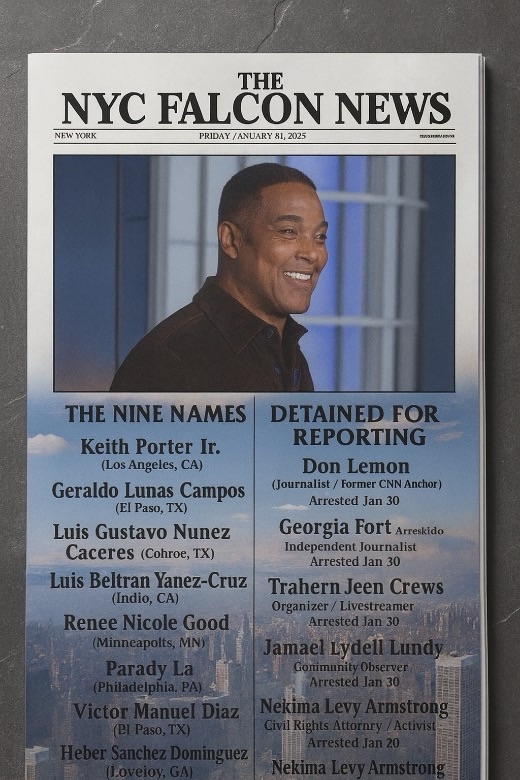
The tension reached a breaking point in January 2026, when federal agents shot and killed two U.S. citizens, Renee Good and Alex Pretti, during a protest against the presence of ICE in their community. These deaths galvanized the nation; Good and Pretti became martyrs for the movement, their names appearing on thousands of placards across subsequent rallies.
The killing of Keith Porter shortly thereafter further fueled the outrage. This local crisis in Minnesota sparked a statewide general strike on January 23, 2026, and set the stage for the Twin Cities to become the flagship location for the national “No Kings 3.0” mobilization.
Operation Epic Fury and the War in Iran
Simultaneously, the administration initiated a military campaign against Iran, titled Operation Epic Fury, in late February 2026. The war was met with immediate domestic opposition, as organizers pointed to the contradiction of spending billions on missile strikes while the country suffered from a partial government shutdown and rising costs of living.
The “No Kings” movement successfully linked the concepts of domestic “tyranny” (embodied by ICE) with international “imperialism” (embodied by the war in Iran), creating a holistic narrative of opposition.
Anatomy of the March 28, 2026, “No Kings” Protest
The third “No Kings” protest on March 28, 2026, represented the pinnacle of decadal organizing, achieving a scale of participation and geographic breadth previously thought impossible. According to organizers from Indivisible and 50501, at least eight million people participated in over 3,300 events across all 50 states and sixteen countries.
Regional Mobilization and Demographics
The protest’s success was defined by its presence in areas typically considered politically hostile to such movements. While large urban centers like Chicago and New York saw crowds of 200,000 or more, roughly two-thirds of the rallies took place outside major metropolitan areas. In “deep-red” cities such as Midland, Texas, and Boise, Idaho, hundreds of people gathered to protest the war and the administration’s immigration policies.
| Region | City | Estimated Attendance | Notable Details |
|---|---|---|---|
| Midwest | St. Paul, MN | 200,000 | Flagship event; Bruce Springsteen performed “Streets of Minneapolis”. |
| Northeast | Boston, MA | 180,000 | Largest crowd in city history; Ed Markey and Elizabeth Warren spoke. |
| Northeast | New York, NY | Thousands | Families carried Palestinian and Pride flags; anti-war focus. |
| Northeast | Philadelphia, PA | 80,000 | March from City Hall to Independence Mall; Rep. Mary Gay Scanlon spoke. |
| West | San Diego, CA | 40,000 | Massive march in downtown; human banner at Ocean Beach. |
| South | Miami, FL | Thousands | Keynote by Jamie Raskin; focused on “servants of the people”. |
| South | Birmingham, AL | 7,000 | Significant turnout in a conservative-leaning state. |
Minnesota as the Emotional Epicenter
In Minnesota, the flagship rally at the State Capitol was a somber yet defiant commemoration of Renee Good and Alex Pretti. Bruce Springsteen’s performance of “Streets of Minneapolis” served as a cultural anchor, with the singer telling the crowd that their commitment “told us that this was still America” in the face of a “reactionary nightmare.”
Political Participation: The Role of Jamie Raskin and Congressional Democrats
A critical factor in the legitimacy and reach of the March 28 protest was the active participation of high-ranking Democratic officials. Representative Jamie Raskin of Maryland emerged as a central figure, bridging the gap between grassroots activists and institutional politics.
In the week leading up to the protest, Raskin hosted poster-making events for students and constituents in Silver Spring, Maryland, emphasizing that the movement was a “great hot bed of political signs.”
On the day of the protest, Raskin traveled to Miami to deliver a keynote address at Tropical Park. His speech articulated the core philosophy of the “No Kings” theme, stating that public officials are “nothing but the servants of the people” and that when they start to act as “kings and queens,” it is the duty of the citizenry to “reject, disselect, evict, impeach, try, convict, remove, [and] disqualify” them.
Other notable participants included Senator Bernie Sanders, Senator Ed Markey, and Representative Ayanna Pressley, each of whom used the platform to connect the “No Kings” message to their specific legislative agendas, such as healthcare reform and the abolition of the filibuster.
Strategic Mechanisms: Digital Symbiosis and Facebook Mobilization
The unprecedented scale of the 2026 mobilization was made possible by a mature digital infrastructure that allowed for decentralized planning and real-time coordination. While Indivisible provided the professional “Mass Calls” and Zoom-based strategy sessions, Facebook groups and Reddit served as the primary tools for localized logistics.
The Role of Social Media Platforms
Facebook, in particular, was the engine for local chapter growth. Thousands of “Indivisible” and “50501” Facebook groups allowed organizers to manage local permits, recruit “peacekeeper” volunteers, and distribute the “March 28 Toolkit,” which contained branded media materials and de-escalation guidelines. This digital symbiosis meant that a protest in a small town like Driggs, Idaho, could use the same high-quality messaging and legal resources as the flagship event in St. Paul.
Furthermore, the movement utilized social media to bypass traditional media narratives. Organizers documented federal agent activities in real time, sharing footage of ICE raids and Operation Metro Surge directly with their followers. This “citizen journalism” was crucial in building the national outrage that culminated in the March 28 event.
The 50501 Movement’s use of the hashtag #buildtheresistance and the r/50501 subreddit allowed for a constant flow of tactical innovation, such as the organization of “mutual aid” potlucks and food drives to sustain protesters during the ongoing government shutdown.
Sociological Analysis and the 3.5% Rule
The “No Kings” movement was explicitly informed by sociological theories of mass mobilization. Organizers frequently cited the “3.5% rule” — the idea that no government can withstand a challenge by 3.5% of its population without either accommodating the movement or collapsing. With eight million participants, the March 28 protest involved roughly 2.4% of the U.S. population, signaling that the movement was approaching a critical threshold of disruptive potential.
Demographics and Support for Political Violence
Research by the Brookings Institution highlighted the demographic shifts within the movement. While participants remained overwhelmingly college-educated and left-leaning, the 2025–2026 wave saw an increase in the percentage of men and a broader geographic spread than the 2017 Women’s March. However, the data also revealed a troubling trend: support for political violence among left-leaning Americans rose by 9% in 2025, reaching 26%. This shift was attributed to the “high-profile acts of political violence” occurring throughout the year, including the murder of state lawmakers and the fatal shootings by federal agents in Minneapolis.
| Survey Year | Movement | BA Degree+ | Left-Leaning | Support for Political Violence |
|---|---|---|---|---|
| 2017 | Women’s March | 87% | 92% | N/A |
| 2024 | National Baseline | N/A | N/A | 21% |
| 2025 | No Kings 1.0 | 89% | 97% | 26% (Left-leaning) |
| 2025 | No Kings 2.0 | 88% | 90% | 20% (General) |
The “No Kings” coalition attempted to counter this trend by emphasizing “nonviolence” as a “hard-headed strategic matter.” Leadership explicitly trained organizers in de-escalation to avoid giving the administration a pretext for a broader crackdown.
Institutional Response and the Midterm Horizon
The White House’s response to the March 28 mobilization remained largely dismissive, with spokespeople characterizing the eight million participants as a fringe group of “paid reporters” and “leftist funding networks.” However, the political reality of such massive numbers began to influence the legislative branch. In the days following the protest, several moderate Republicans expressed concern over the “insidious activities of ICE” and the lack of a budget agreement, suggesting that the “No Kings” movement was succeeding in creating a schism between federal leadership and local communities.
For the organizers, the March 28 event was not the conclusion of the movement but a “muscle-building” exercise for the future. The energy from the protest is currently being redirected into several key areas:
- ICE Watch Training: Thousands of participants signed up for local training programs designed to monitor and document federal immigration activities.
- DHS Warehouse Opposition: Local chapters in Maryland and Pennsylvania are organizing to block the construction of new federal detention facilities through zoning challenges and local legislation.
- 2026 Midterm Strategy: Indivisible and 50501 are focusing on turning “street power” into “electoral power,” with a specific emphasis on bellwether counties that showed high turnout for the “No Kings” rallies.
Conclusion: The Legacy of a Decade of Dissent
The chronology of grassroots mobilization from 2016 to 2026 reveals a trajectory of increasing sophistication, scale, and strategic depth. The Indivisible movement, founded by Ezra Levin and Leah Greenberg, provided the original DNA of the resistance, teaching a generation of activists how to engage with the levers of power. The 50501 Movement and the “No Kings” protests took this foundation and adapted it for an era of heightened executive overreach and international conflict, leveraging the power of digital symbiosis to coordinate millions across a fractured nation.
The eight million people who took to the streets on March 28, 2026, represented a diverse and resilient cross-section of American society. By successfully weaving together grievances over immigration enforcement, economic inequality, and foreign war, the movement created a unified front against what it characterized as the “monarchical” aspirations of the presidency.
Whether this mobilization can translate its historic scale into permanent institutional change remains to be seen, but the events of March 28 have irrevocably altered the boundaries of political possibility in the United States. The “No Kings” movement has demonstrated that in an era of digital connectivity, the power of the grassroots is no longer a fleeting surge but a sustained, professionalized force capable of challenging the highest offices in the land.
Call to Action: Join the Community
meshekatlan@wordpress.com has been our community hub and home since 2014 — the place where I, Jairo Bonilla (Jay), have meticulously documented the events here at home and abroad. From elections and uprisings to local organizing and global crises, we have been a community of boots on the ground: everyday people who love democracy and refuse to accept the chaos and cruelty this administration has been dishing out since 2016.
Just as we covered the events of 2016, we were there in 2025 — and now, in 2026, eight million strong across America. If you support free journalism, if you believe in grassroots power, or if anything in this chronicle has resonated with you, we invite you to join the movement.
Visit our home at meshekatlan@wordpress.com, stand with us, and help write the next chapter of this resistance.